
A national Black community conversation
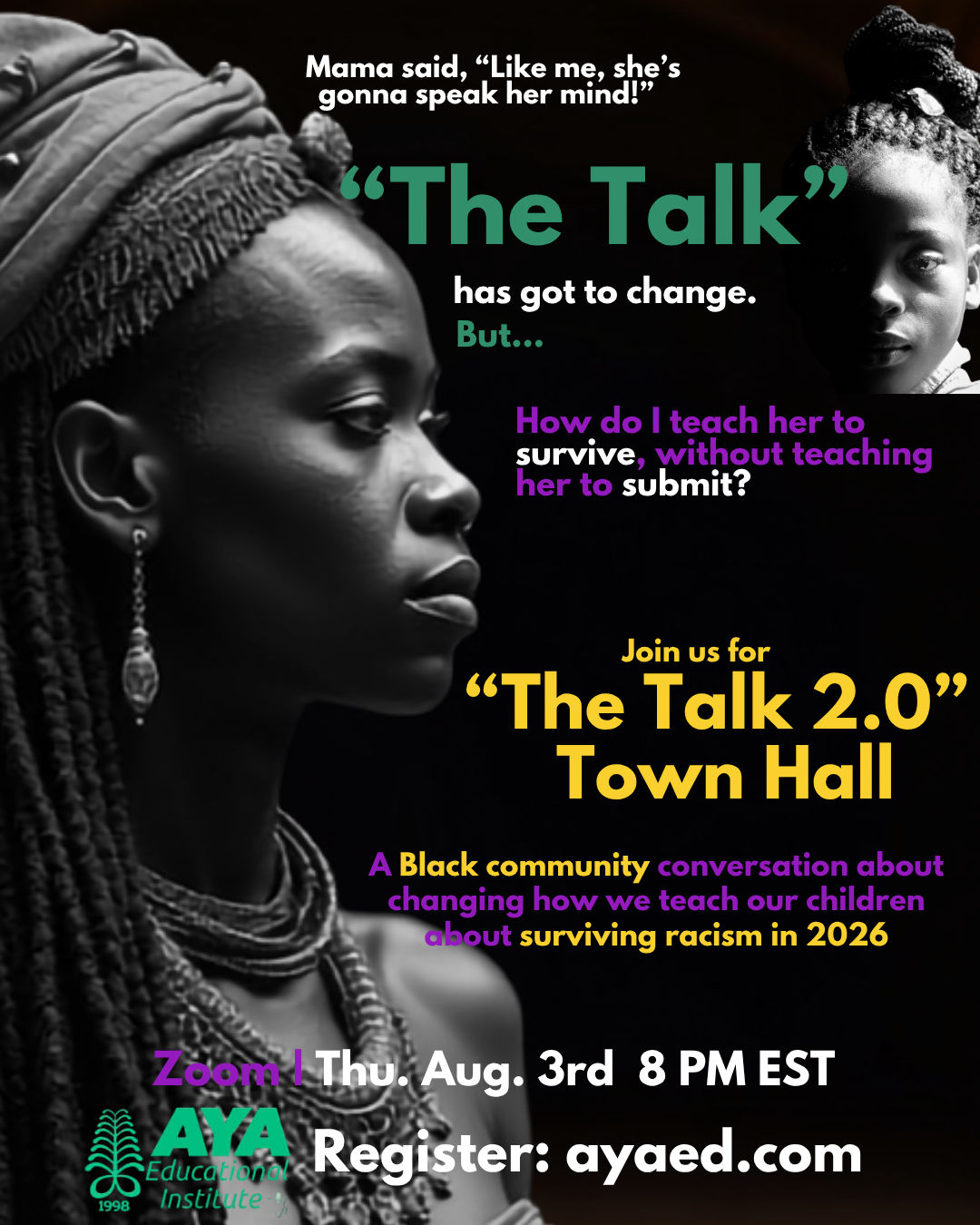
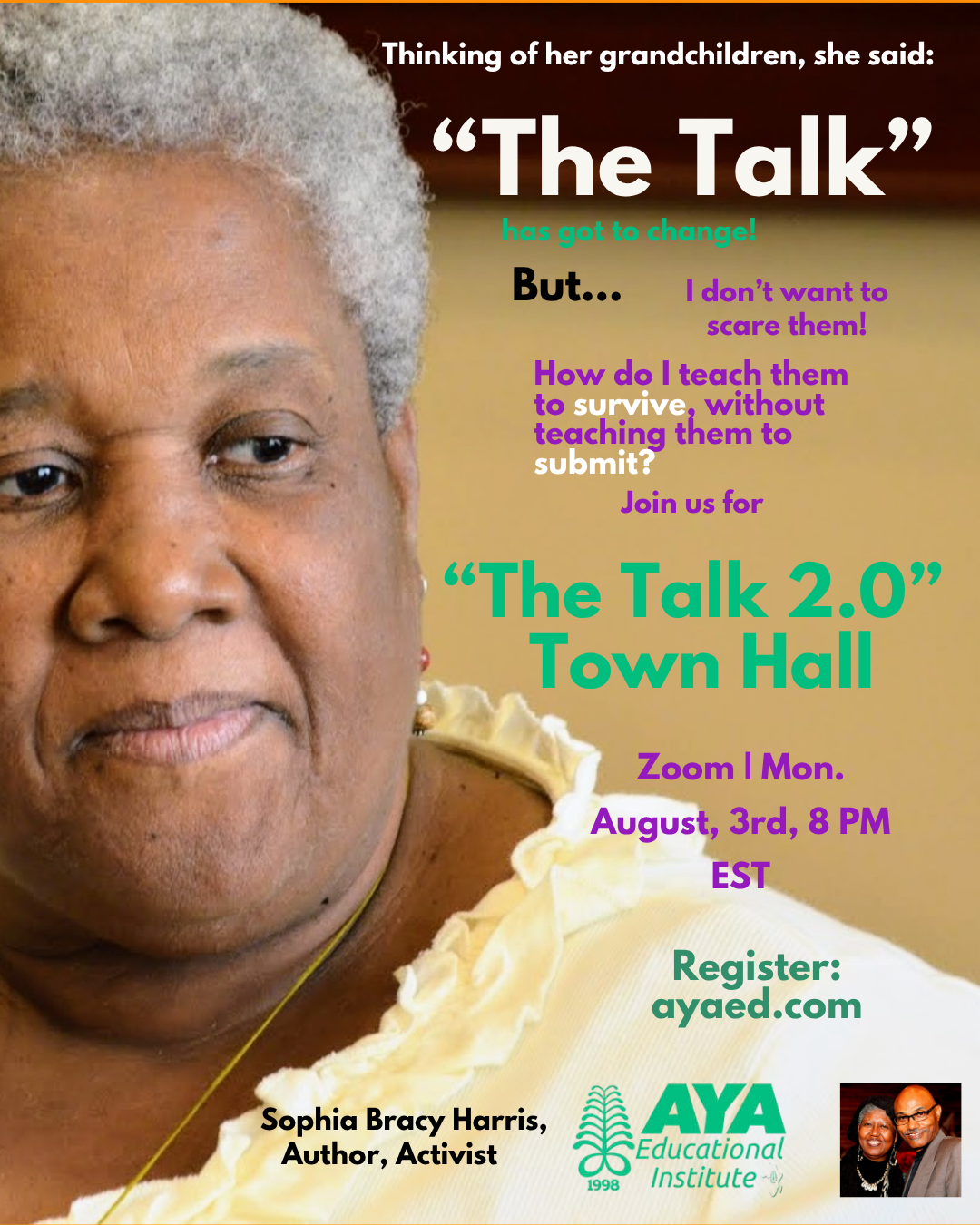
“The Talk” has got to change.
From Survival to Strategy
How do we teach our children to survive racism without teaching them to submit — and teach them about oppression without depressing them?
Scroll to enter the conversation ↓
Why The Talk 2.0?
“Be polite” and “keep your hands on the wheel” are not enough.
For generations, Black parents and grandparents have used “The Talk” to help our children survive racist encounters. Those conversations came from love, experience, and the determination to get our children home alive.
But our children now face racism through police and vigilantes, schools and workplaces, surveillance and social media, political attacks, misinformation, isolation, and institutions that too often deny or disguise the harm.
The Talk 2.0 expands protection into preparation. It equips young people to think critically, build healthy fight-back identities, protect one another, choose when to stand, when to retreat, and how to organize for lasting power.
The questions parents keep asking
How do I teach them about oppression without depressing them?
What should every Black teenager understand before the world tries to define them?
How do we move from individual caution to collective strategy?
A movement, not one event
Every community should have this conversation.
The national Town Hall begins the work. Local gatherings carry it forward. Over the next three months, families, educators, youth workers, faith communities, fraternities and sororities, neighborhood groups, and Black organizations can host their own face-to-face or affinity-group conversations.
- Center the voices and realities of Black youth.
- Preserve survival wisdom while challenging submission.
- Develop practical family and community strategies.
- Collect local insights and feed them into a national learning network.
- Turn conversation into commitments, relationships, and action.
The Talk 2.0 framework
Prepare young people to do more than endure.
Recognize racism, propaganda, manipulation, and changing threats without self-blame.
Build historical knowledge, identity, discernment, rights awareness, and situational judgment.
Practice emotional regulation, safety planning, documentation, mutual aid, and collective care.
Learn when to comply temporarily, when to leave, when to challenge, and how to organize.
Create relationships, institutions, habits, and community power that outlast a single crisis.
The Talk 2.0 Community Facilitators
They turn one national conversation into hundreds of local ones.
Community Facilitators are trusted individuals and organizational partners who convene, guide, document, and follow up on local or affinity-group versions of The Talk 2.0. They do not lecture the community or impose a single answer. They create a disciplined, courageous space where participants can name what has changed, preserve what remains useful, hear youth directly, and develop practical next steps.
Their goals are to:
Bring parents, grandparents, youth, educators, organizers, and community leaders into structured dialogue.
Help participants move from fear, denial, or isolation toward clarity, connection, and strategy.
Identify what today’s version of “The Talk” must include — and what it must stop teaching.
Recruit local partners and establish continuing circles of learning, protection, and action.
Return themes, recommendations, and commitments to AYA so local wisdom shapes the national movement.
Protect participant dignity, youth voice, confidentiality, and emotional safety throughout the process.
Facilitator portal: ayanetwork.com/t20cf
Host a local Talk 2.0
A simple path from interest to action.
Commit
Choose a city, neighborhood, institution, or affinity group and identify a lead facilitator.
Prepare
Use the AYA agenda, discussion prompts, participation agreements, outreach materials, and reporting form.
Convene
Hold a 90-minute or two-hour gathering that centers lived experience, youth voice, and practical strategy.
Return
Send AYA the themes, commitments, recommendations, and interest in continuing the work.
Ready to carry the conversation into your community?
Join the first cohort of The Talk 2.0 Community Facilitators.
“Tonight we are not trying to finish this conversation. We are launching one that will spread from city to city.”
The Talk 2.0